In Part 1 of our Solar Simplified Series, we explained how a grid-connected solar system works. Then, in Part 2, we looked at how solar batteries store energy and whether they’re worth the investment.
Now that you understand how both systems work, you might be asking:
“Which type of solar system should I choose?”
The answer depends on your home, your energy usage, your budget and your future plans.
In Part 3 of our Solar Simplified Series, we’ll explain the difference between a standard grid-connected solar system, a battery-ready solar system and a complete battery solar system, helping you decide which solution may be the best fit for your home.
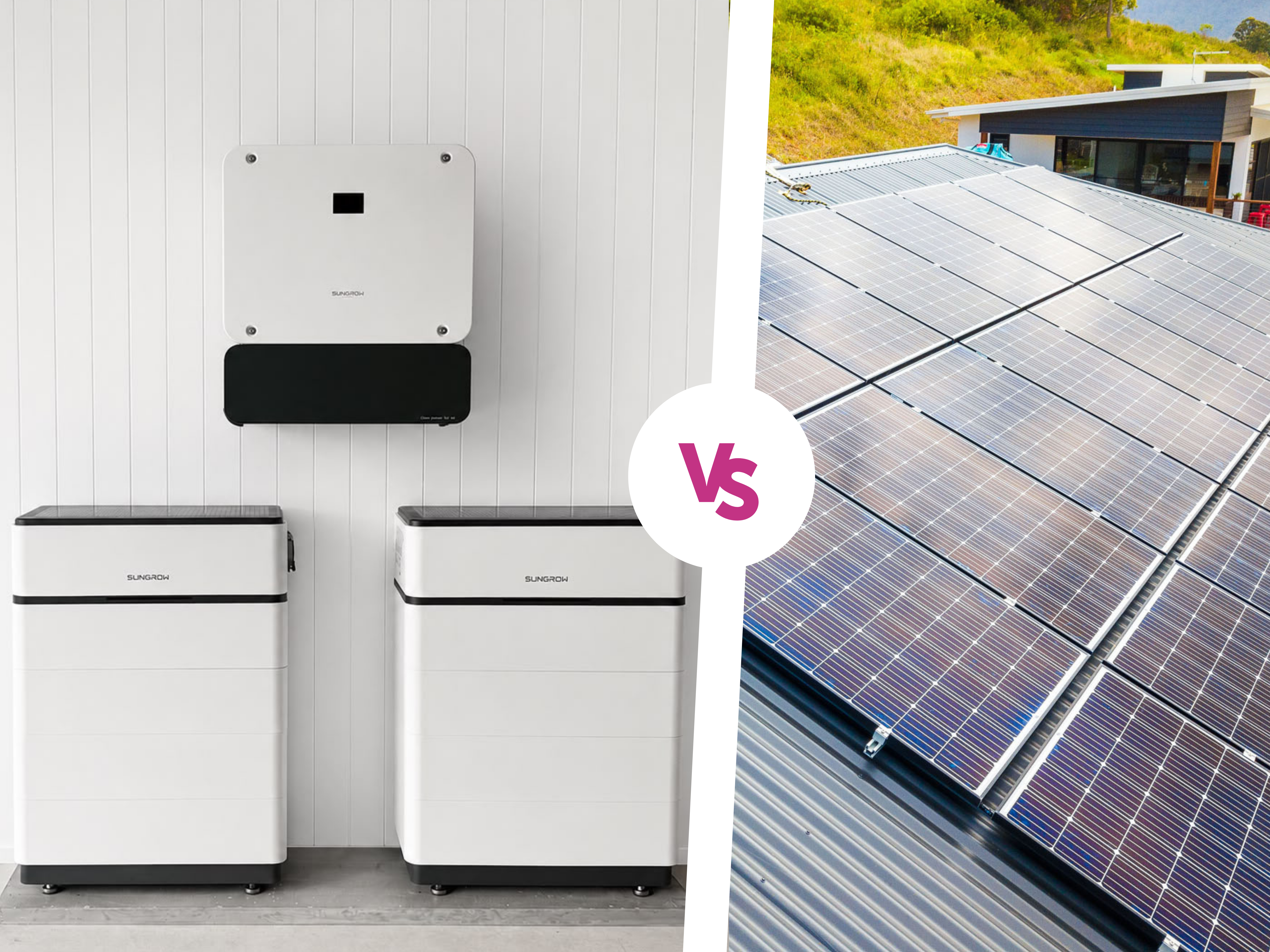
A standard grid-connected solar system is the most common type of solar installation in Australia.
It includes:
During the day, your solar panels generate electricity. Your home uses that electricity first, and any excess energy is exported back to the grid.
Then, once the sun goes down, your home simply draws electricity from the grid.
For many households, this option delivers excellent savings while keeping the system simple and affordable.
A battery-ready solar system works just like a standard grid-connected system today, but it has one important advantage.
It’s designed so you can add a battery later without replacing major components like the inverter.
Think of it like building a home with plans for a future extension. You don’t need the extra space today, but you’ve already prepared for it.
Many homeowners choose this option because they want to start saving with solar immediately while leaving the door open to battery storage in the future.
A battery solar system includes:
Instead of exporting all your excess solar energy, the battery stores much of it for later use.
When the sun goes down, your home can use the electricity stored in the battery before drawing power from the grid.
As a result, you can use more of the solar energy you generate yourself.
Depending on the battery and system design, some systems can also provide backup power during a blackout.
This is one of the questions we’re asked most often.
The answer is—it depends.
A standard grid-connected solar system usually has the lowest upfront cost and often provides the fastest return on investment.
However, a battery solar system can help you purchase less electricity from the grid, particularly if you use a lot of electricity during the evening.
Meanwhile, a battery-ready system offers a balance between the two by allowing you to spread your investment over time.
The best option comes down to your household’s energy usage, budget and future goals.
Here’s a simple comparison.
Not necessarily.
Many homeowners start with a grid-connected or battery-ready solar system and add battery storage later.
Others decide to install a battery from day one because it suits their lifestyle and long-term goals.
Neither option is right or wrong.
The important thing is choosing a system that matches your needs today while considering your plans for the future.
Every home is different.
Your roof, electricity usage, budget and future plans all influence which solar solution will deliver the best value.
That’s why personalised advice is so important.
At Coffs Solar Energy, we’ve helped thousands of homeowners and businesses across the Mid North Coast find the right solar solution for their needs.
As one of the benchmark solar companies on the Upper Mid North Coast of NSW, we’ve built our reputation on premium-quality systems, honest advice and exceptional customer service. In a regional community like Coffs Harbour, reputation is everything, and we’re proud that much of our work comes from referrals and recommendations.
If you’re considering solar but aren’t sure which system is right for you, our experienced team is here to help.
Get a free solar quote today, and we’ll recommend the solution that best suits your home, budget and future energy goals.
We hope this three-part Solar Simplified Series has helped take the mystery out of solar and given you the confidence to better understand your options. Whether you’re considering a standard grid-connected solar system, planning for a battery in the future or ready to invest in a complete battery solar system, our experienced team is here to help.
If you’re ready to take the next step, get a free, no-obligation solar quote and we’ll recommend the best solution for your home, lifestyle and budget.


 02 6652 2718


