Before we dive into how solar works, it’s important to understand one of the most common terms you’ll see on your electricity bill: kilowatt-hours (kWh).
Simply put, a kWh is a way of measuring how much electricity you use.
Think of it like fuel in your car:
For example, a kettle might use about 2kWh if it runs for an hour. Similarly, a dishwasher may use around 1–2kWh per cycle. Meanwhile, an average Australian home typically uses between 15 and 25kWh of electricity each day.
When your electricity bill arrives, you’re paying for the number of kWh you’ve used from the grid. Therefore, the goal of solar is to generate some or all of those kWh yourself rather than buying them from your electricity retailer.
A grid-connected solar system is the most common type of solar installation found on Australian homes.
As the name suggests, your solar system remains connected to the electricity grid while generating its own renewable energy from sunlight.
A typical grid-connected solar system consists of:
Together, these components work seamlessly to power your home and reduce the amount of electricity you need to purchase from your energy retailer.
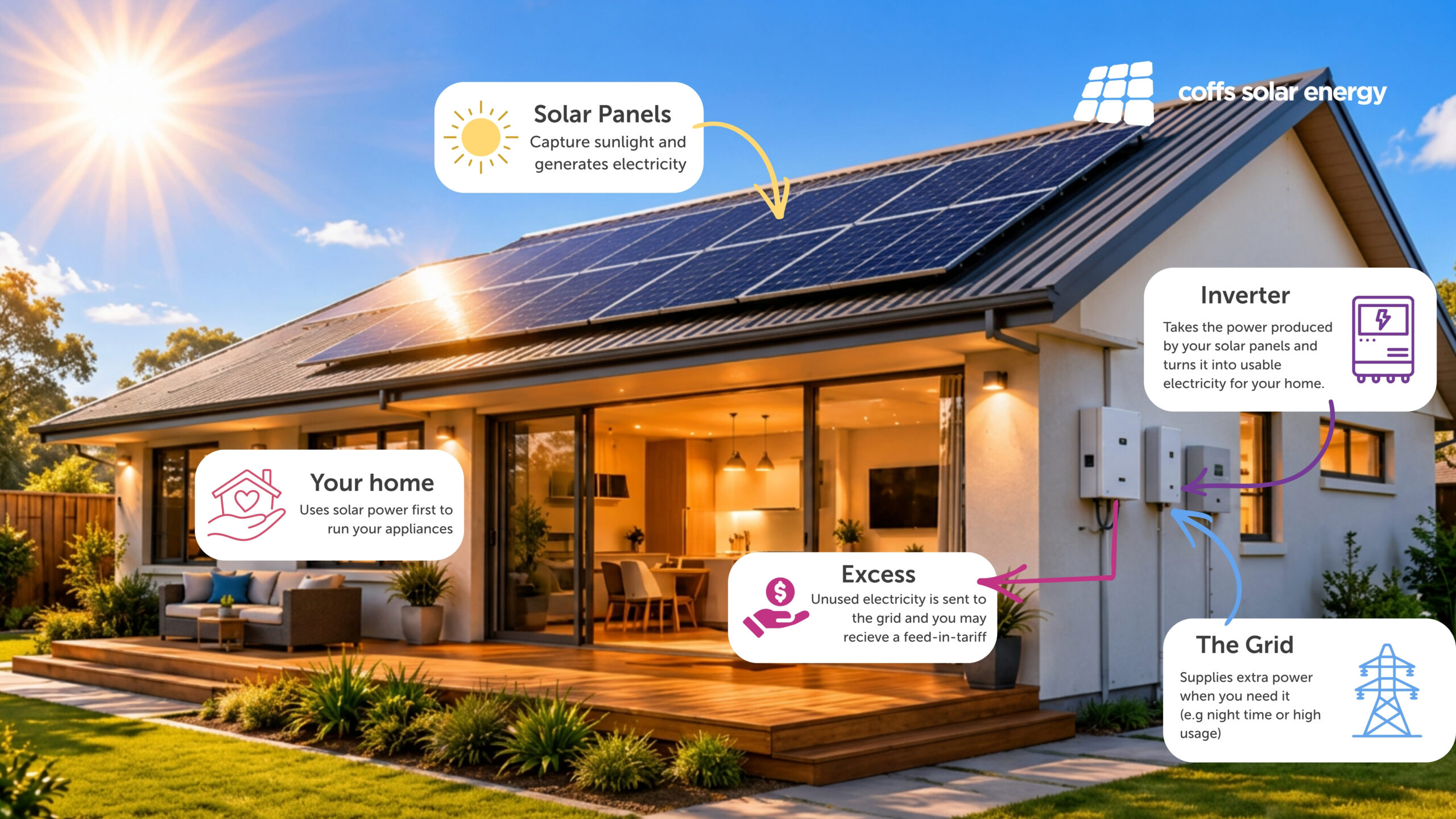
Here’s a simple overview of how a grid-connected solar system operates:
Let’s look at each step in more detail.
The process starts with your solar panels.
During daylight hours, solar panels capture energy from the sun and convert it into direct current (DC) electricity. The more sunlight available, the more electricity your panels can produce.
Australia’s climate makes solar power one of the most effective ways for homeowners to reduce electricity costs while lowering their environmental impact.
The electricity generated by solar panels cannot be used directly by most household appliances.
This is because homes operate on alternating current (AC) electricity, while solar panels generate DC electricity.
The solar inverter converts the DC electricity produced by your solar panels into AC electricity that can power your lights, appliances, air conditioning and other electrical devices.
Think of the inverter as the brain of your solar power system. It manages the flow of electricity and ensures your home receives power in the correct form.
One of the biggest benefits of a grid-connected solar system is that your home always uses its own solar power first.
When your solar panels are generating electricity, that power flows directly to your home’s electrical circuits. Appliances running during the day can be powered by solar energy before any electricity is imported from the grid.
This means you buy less electricity from your retailer, helping to lower your power bills.
Generally speaking, the more solar energy you use within your home, the greater your potential savings.
There will be times when your solar system produces more electricity than your household is using.
For example, if you’re at work during the day and most appliances are switched off, your solar panels may generate more power than your home requires.
Rather than going to waste, this excess electricity is automatically exported to the electricity grid.
Depending on your retailer and electricity plan, you may receive a feed-in tariff for the energy you export. While feed-in tariff rates vary, exporting excess solar power can help offset your electricity costs.
Yes, they do.
Solar panels continue to generate electricity on cloudy days, although production levels will be lower than on a clear, sunny day.
Your home will use whatever solar power is available, and if additional electricity is needed, the grid automatically supplies the difference.
This process happens instantly and without interruption, so you’ll continue to enjoy reliable power throughout your home.
Household electricity demand changes constantly.
Running multiple appliances, air conditioning systems, ovens or electric vehicle chargers can increase your energy usage beyond what your solar system is producing at that moment.
When this happens, the electricity grid automatically supplies the additional power required.
The transition is seamless, ensuring your home always has access to reliable electricity.
Solar panels require sunlight to generate electricity.
Once the sun goes down, your solar system stops producing power.
Without a battery, your home will draw electricity from the grid throughout the evening and overnight until solar production resumes the following morning.
This is why many homeowners choose to run appliances such as dishwashers, washing machines and pool pumps during the day when solar power is being generated.
For most homeowners, yes.
A grid-connected solar system is designed to work alongside the electricity grid.
Think of the grid as your backup power source. Your solar system reduces the amount of electricity you need to buy, while the grid remains available whenever your solar production isn’t enough to meet your household’s needs.
This provides the best of both worlds:
At Coffs Solar Energy, we’ve helped thousands of homeowners and businesses across the Mid North Coast make the switch to solar.
As one of the benchmark solar companies in the region, we’ve built our reputation on premium-quality systems, expert advice and exceptional customer service. In a regional community like Coffs Harbour, reputation is everything, which is why so much of our work comes from referrals and recommendations from satisfied customers.
If you’re considering solar power and would like to understand how much you could save, our experienced team is here to help. Get a free solar quote today and discover the right system for your home or business. We’ll assess your energy needs and provide expert advice tailored to your property and budget.
Stay tuned for Part 2 of our Solar Made Simple series, where we’ll explain how solar batteries work and whether they’re the right investment for your home.


 02 6652 2718


